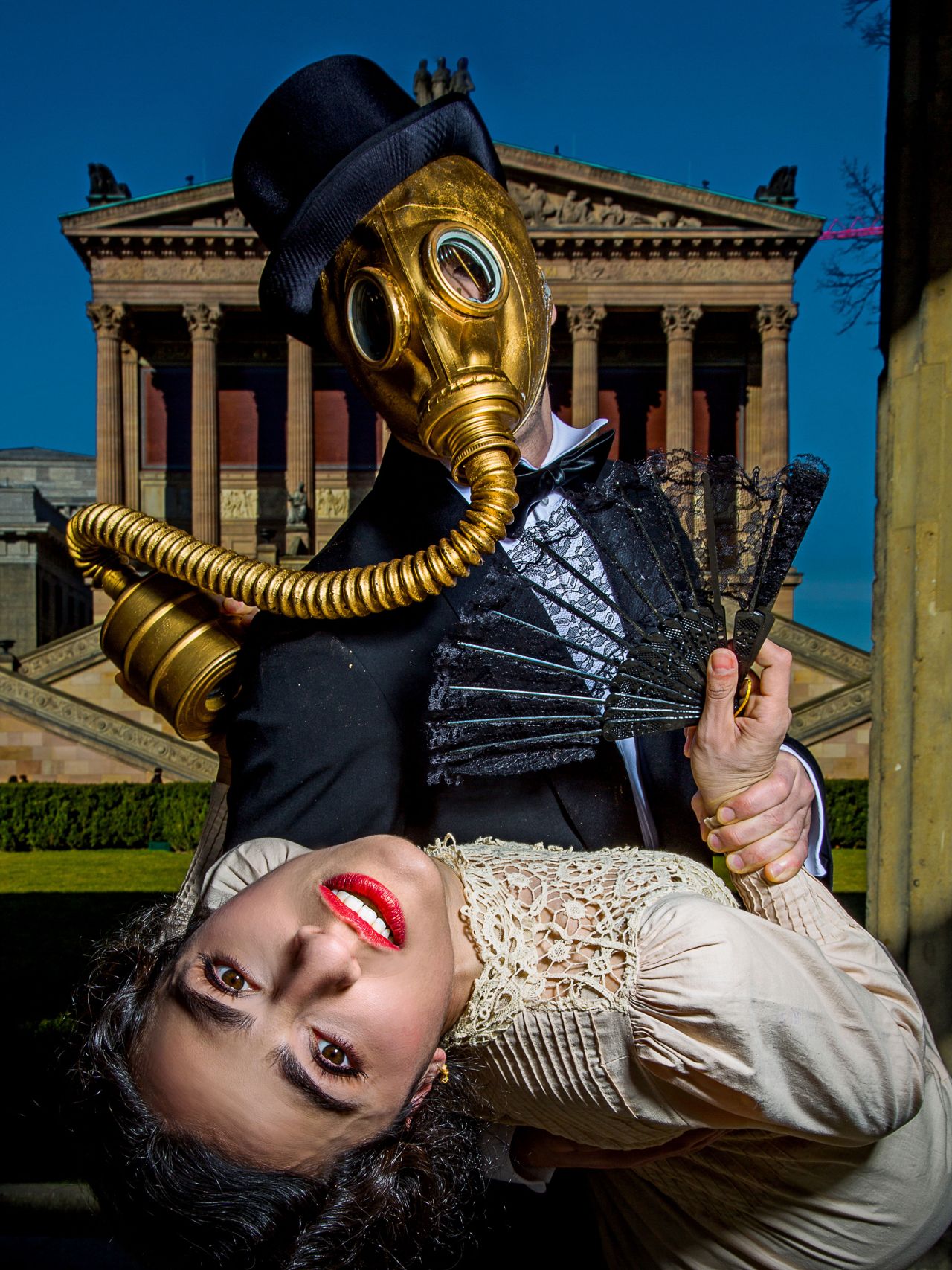
In Berlin, the First World War began as a funfair, the bourgeoisie was intoxicated. Cries of »Hail to thee in the victor's wreath« and »Now thank we all our God« rang out in response to the emperor's declaration, »I only know Germans«. The war was pop, a simple song that promised the ability to unite everyone. In the autumn, »when the first leaves fall«, the victorious soldiers would be back at home. In the recital Could have worked out an ensemble of protagonists make their way to the home front a hundred years later, in order to cut straight to the heart of patriotism through music, between a romantic yearning for stability and warlike dissonance. The mood of 1914 tells us more than the patriotic taboo of today would suggest: unredeemed longings, fears and feelings cry out in them, and they are everything but a past that's already been dealt with. After the Belgian director Ruud Gielens incited confusion about national identity in Belgium with the recital Sing and be happy, in Kein schöner Land he listens in the German forest to an echo of that which was sent to war millions of times as the German soul. Dear fatherland, dress warm.
Premiere 6/May 2014
Theworldpremieretookplaceon6/May2014, underthetitleHätte klappen können – Ein Patriotischer Liederabend.
A production of the Maxim Gorki Theater as part of Europe 14|14 OpenCampus, the artistic program of Europe 14|14 presented by the Maxim Gorki Theater Berlin in cooperation with the Federal Cultural Foundation and the Federal Agency for Civic Education.